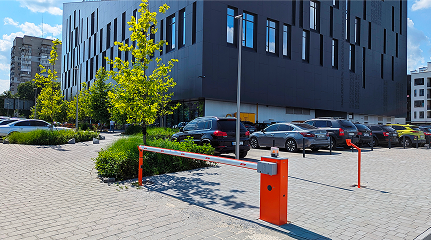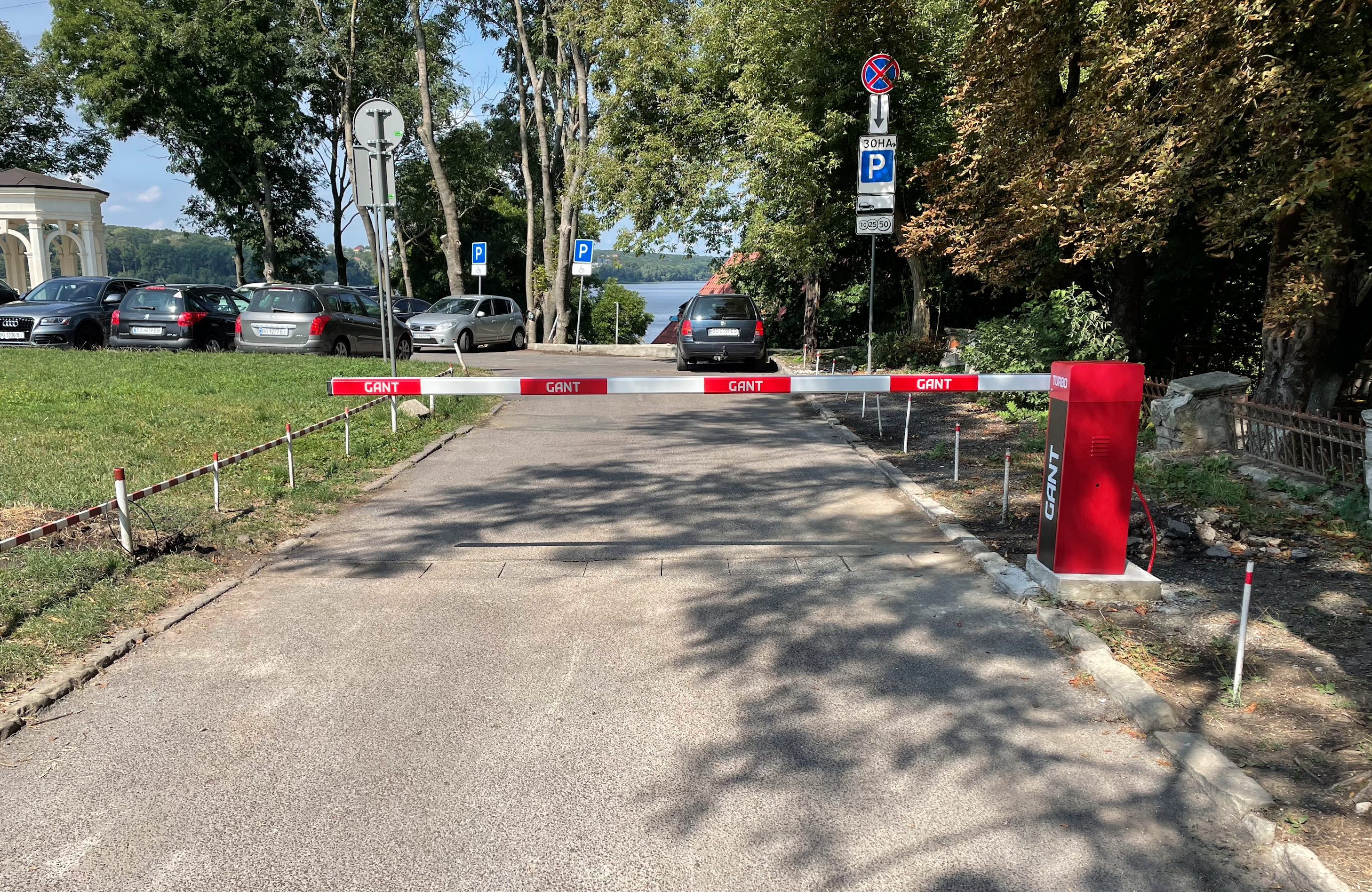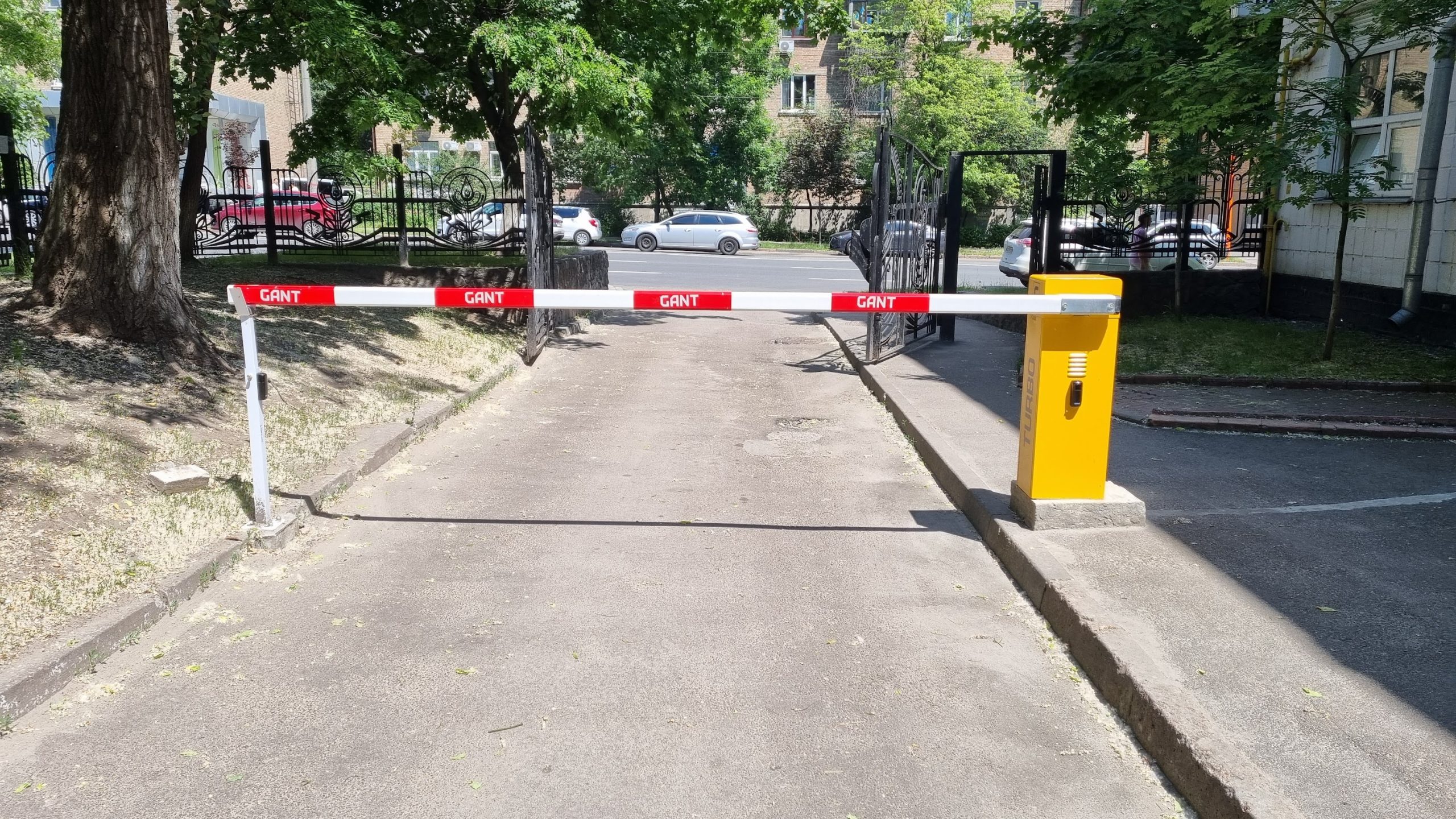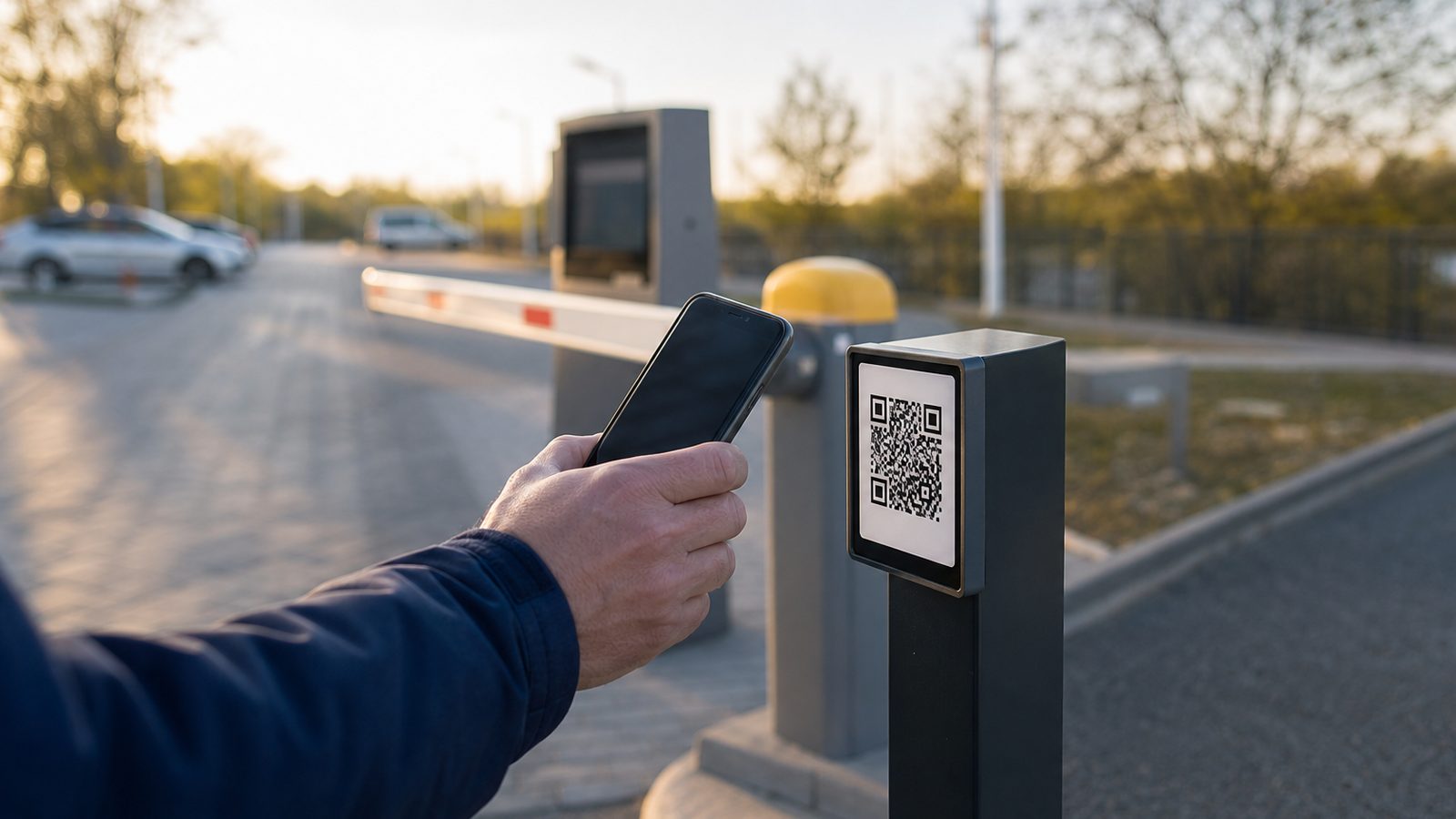
A barrier is the cheapest part of a car park and the one most often chosen wrong. Not because of the brand, but because two parameters get ignored: how wide the lane actually is and how many cycles a day the barrier has to survive.
Arm length is not the same as lane width
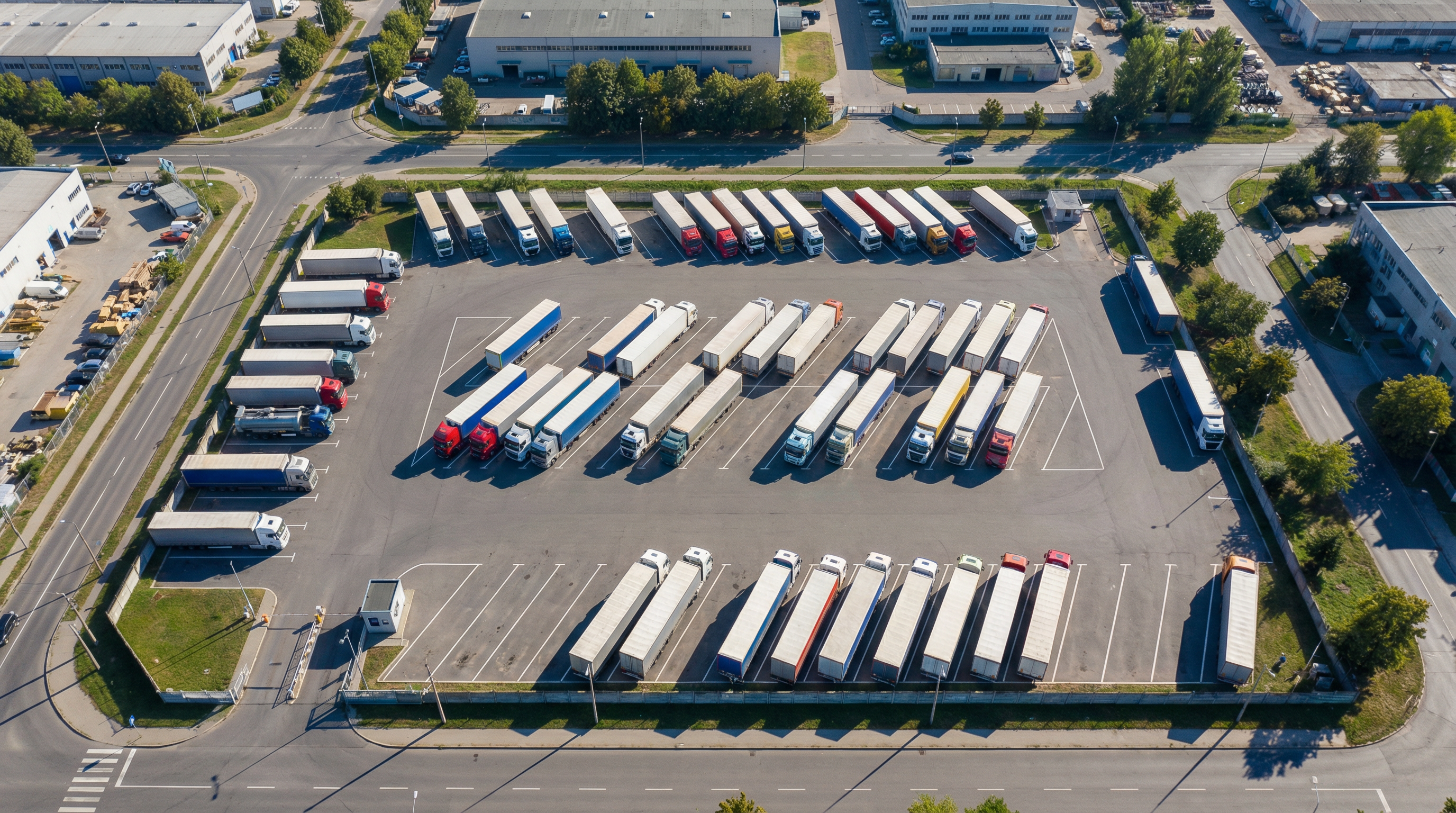
The arm has to cover the lane with a margin, and for truck entrances that margin matters more than anywhere: a tractor unit does not enter in a straight line. Choosing an arm exactly equal to the lane width is the classic mistake that later costs a broken arm every other month.
Intensity decides the lifespan
A residential car park with fifty apartments and a shopping mall entrance are different worlds: dozens of cycles a day versus thousands. The mechanics look the same in a catalogue but wear out at completely different rates. We select the barrier by expected traffic, not by object type.
Safety comes before speed
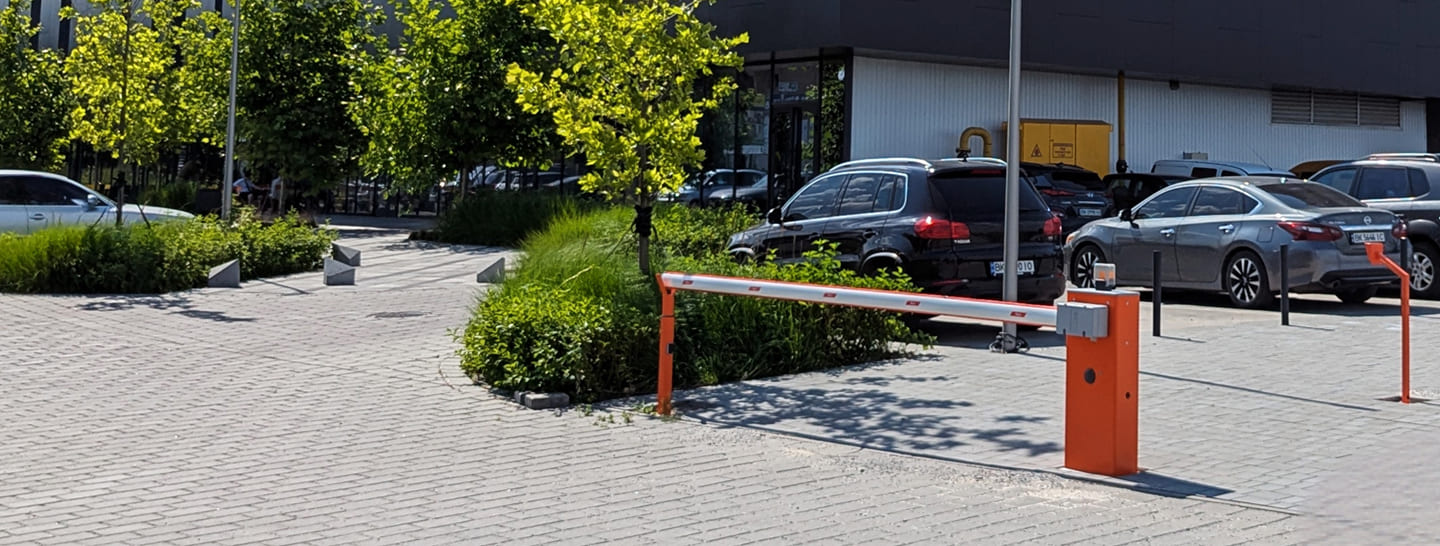
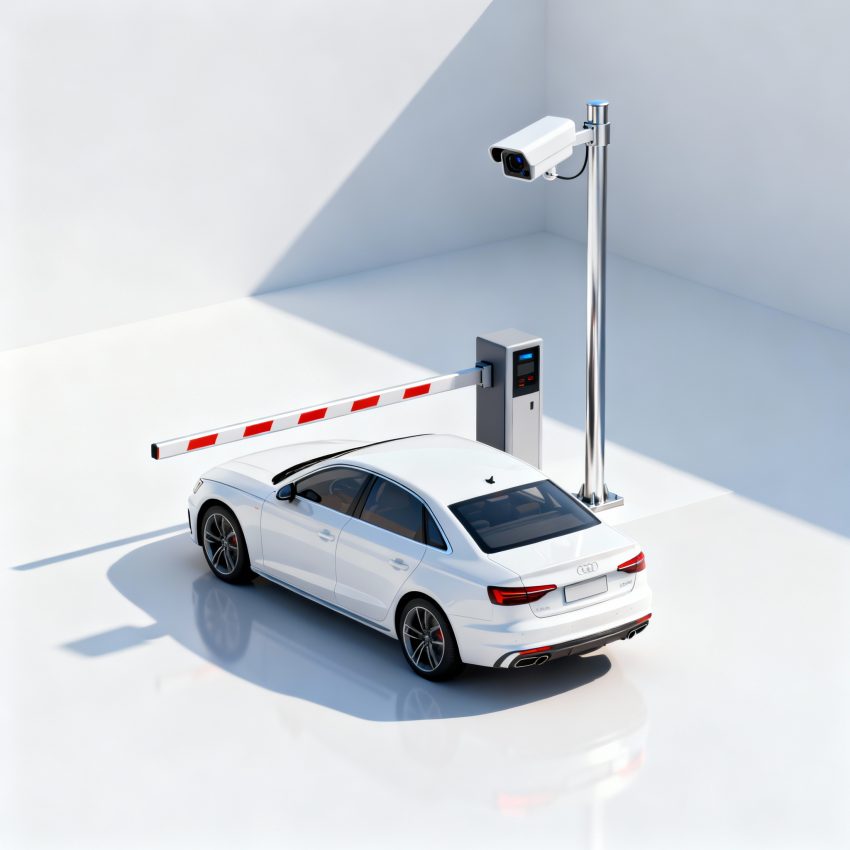
Induction loops and photocells are not an upsell. Without them the arm eventually comes down on a car — and one such case costs more than the whole safety kit. Fast opening only matters after this part is solved.
You probably do not need to replace what you have
If a barrier already stands and works, it usually stays. What ages is the control part and the software, not the mechanics. Adding a controller, plate recognition and software to an existing barrier starts at €2,000 — against €4,000 for a full set with new barriers.
Common questions
Can you connect a barrier from another manufacturer?
In most cases yes. If the barrier exposes standard control interfaces, we connect to it and leave the mechanics in place. If its controller is closed, we replace only that — arms, pedestals and cabling stay.
What happens during a power cut?
The barrier keeps working: an uninterruptible power supply is part of the set. Autonomy time is sized to the site.
See also: all parking equipment · complete systems · software
Equipment and modules
Barriers · Payment kiosks · ANPR / LPR recognition · QR payment · Modernisation