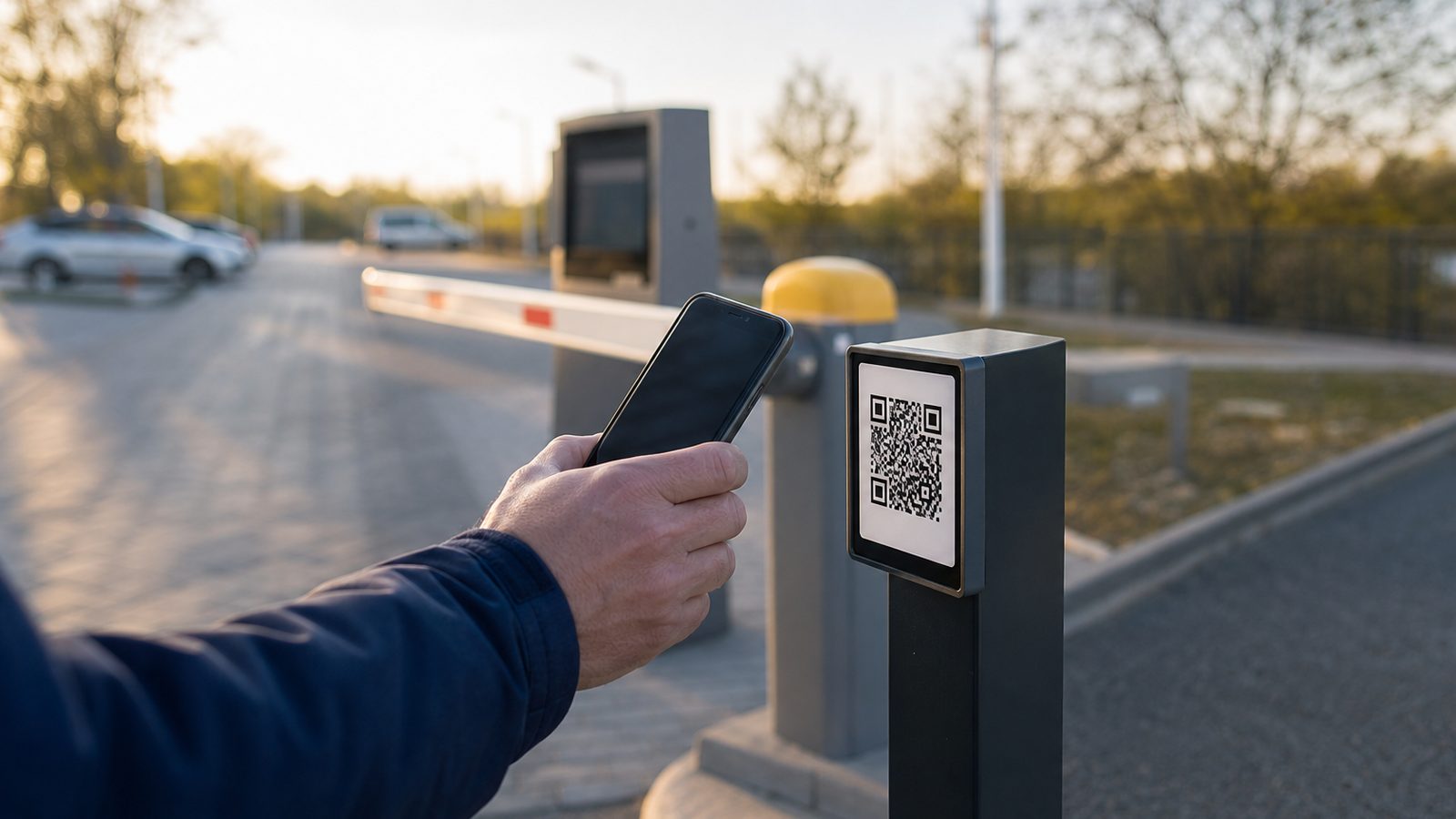
QR payment is the cheapest way to start charging for parking. Nothing to install for the driver, no card terminal to maintain on site, and no cash to collect.
How it works for the driver
The driver scans a code — on the barrier, on the ticket or in the hall — and pays from the phone using whatever is already set up there. No app to download, which matters: an app is a barrier to a one-time visitor, and most visitors are one-time.
Where it fits best
- Small and medium car parks where a kiosk would be overkill.
- Guest access in residential complexes — a resident generates a code and forwards it, and the guest neither calls anyone nor pays cash.
- Truck stops where a driver arrives at night and there is nobody to take payment.
What it does not replace
On heavy flow QR alone still leaves payment at the exit, and that is where queues are born. There the right combination is a kiosk in the hall plus QR as an alternative. QR is also not identification — for entry without stopping you need plate recognition.
Common questions
Do drivers need our app?
No. That is the point: payment happens in the phone’s own payment methods, so nothing has to be installed.
Does it work with subscriptions?
Yes. Subscriptions, one-off payments and guest codes live in the same system, so reporting stays in one place.
What does it cost to add?
QR payment is part of the software, not separate hardware. With existing barriers the control part starts at €2,000; the cloud part is from €200 per month.
See also: all parking equipment · complete systems · software
Equipment and modules
Barriers · Payment kiosks · ANPR / LPR recognition · QR payment · Modernisation