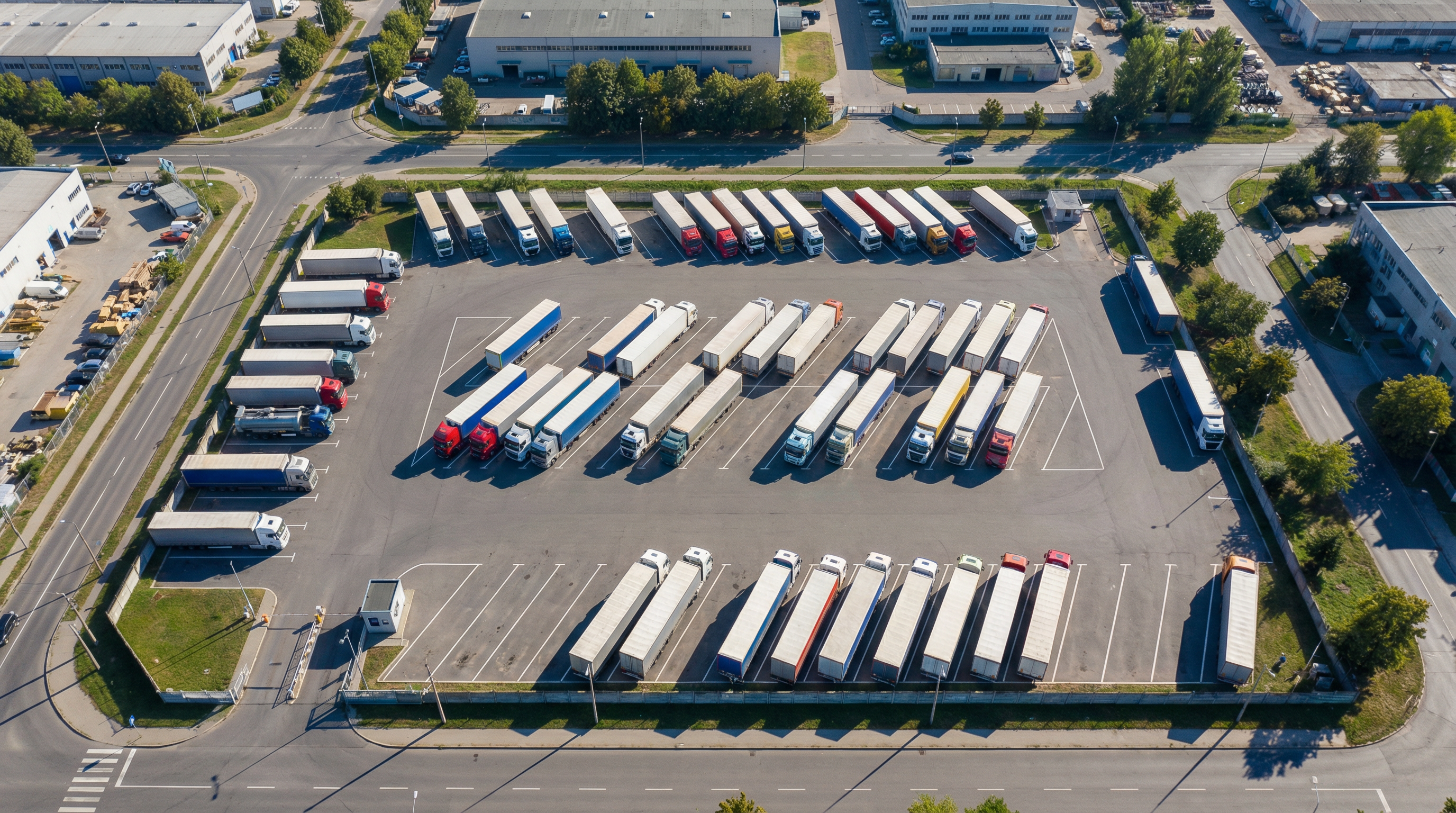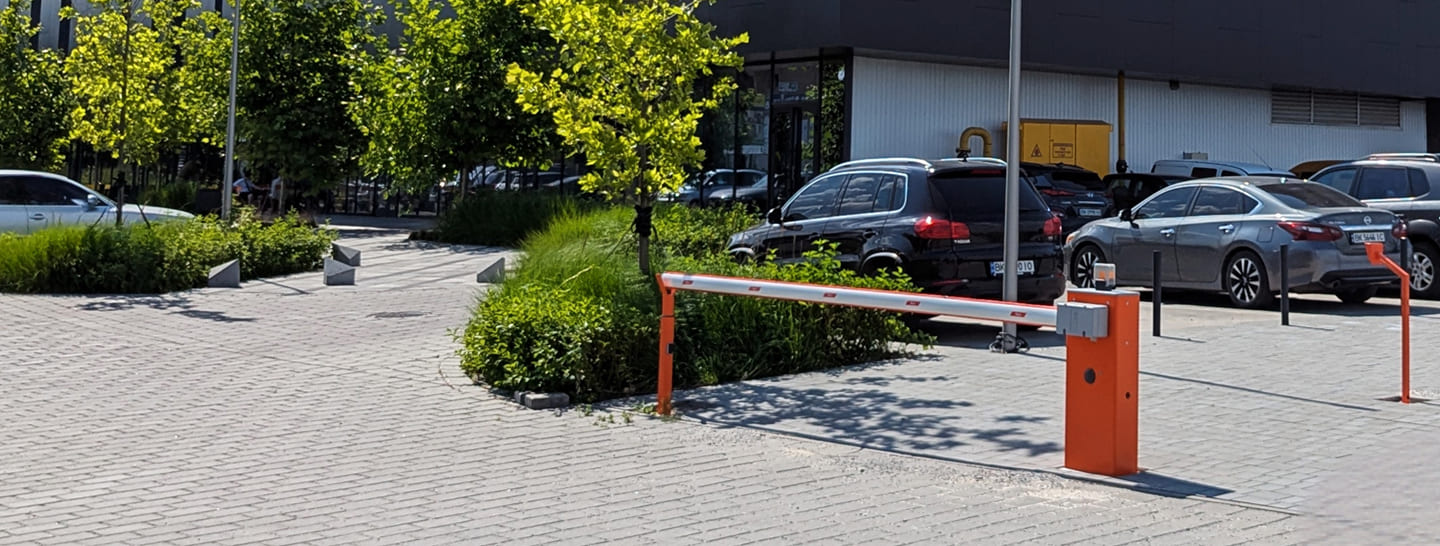
A truck site fails or succeeds on one question: what happens when a driver arrives at three in the morning and nobody is on duty. Everything else — tariffs, reports, gate speed — follows from how you answer it.
Why a truck site is not a normal car park
Dimensions. A tractor unit enters slowly and needs a wider lane and a longer waiting area before the barrier. Get this wrong and one truck manoeuvring blocks the entrance for everyone else.
Schedule. The main flow is at night, dictated by driving and rest rules rather than your office hours. A site that only accepts vehicles while an operator is present loses its most valuable customers.
Customer. The payer is usually the carrier, not the driver. A company does not need a paper slip — it needs a monthly report and an invoice.
What makes unattended operation possible
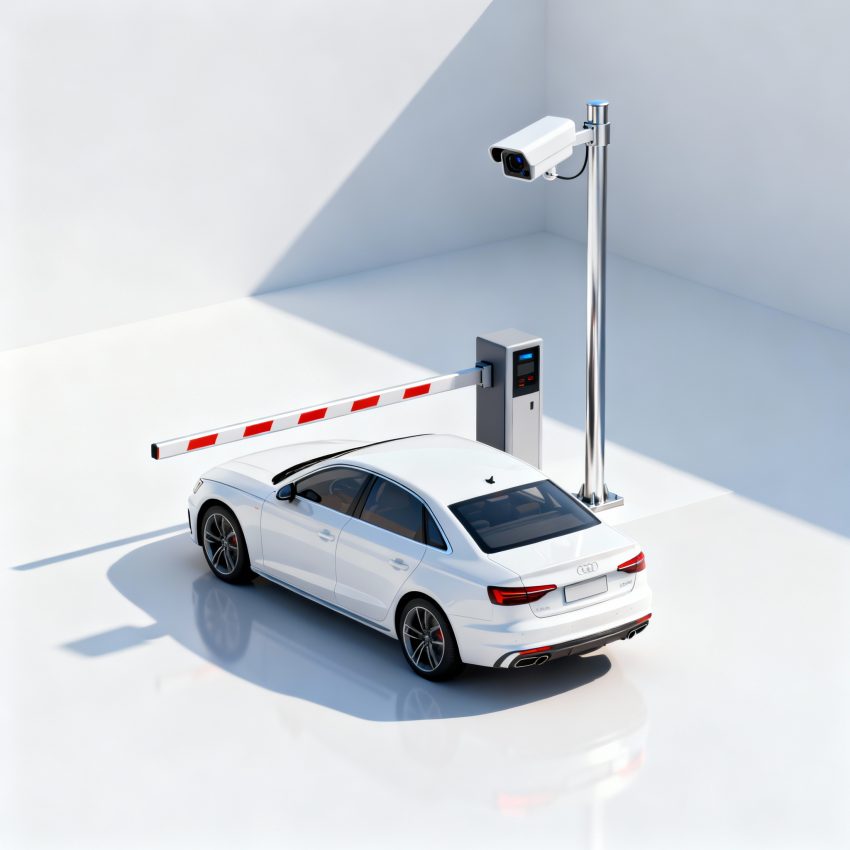
- Licence plate recognition. For trucks this is not convenience but necessity: a driver will not climb down from the cab to tap a card. The plate is read on approach and the barrier opens.
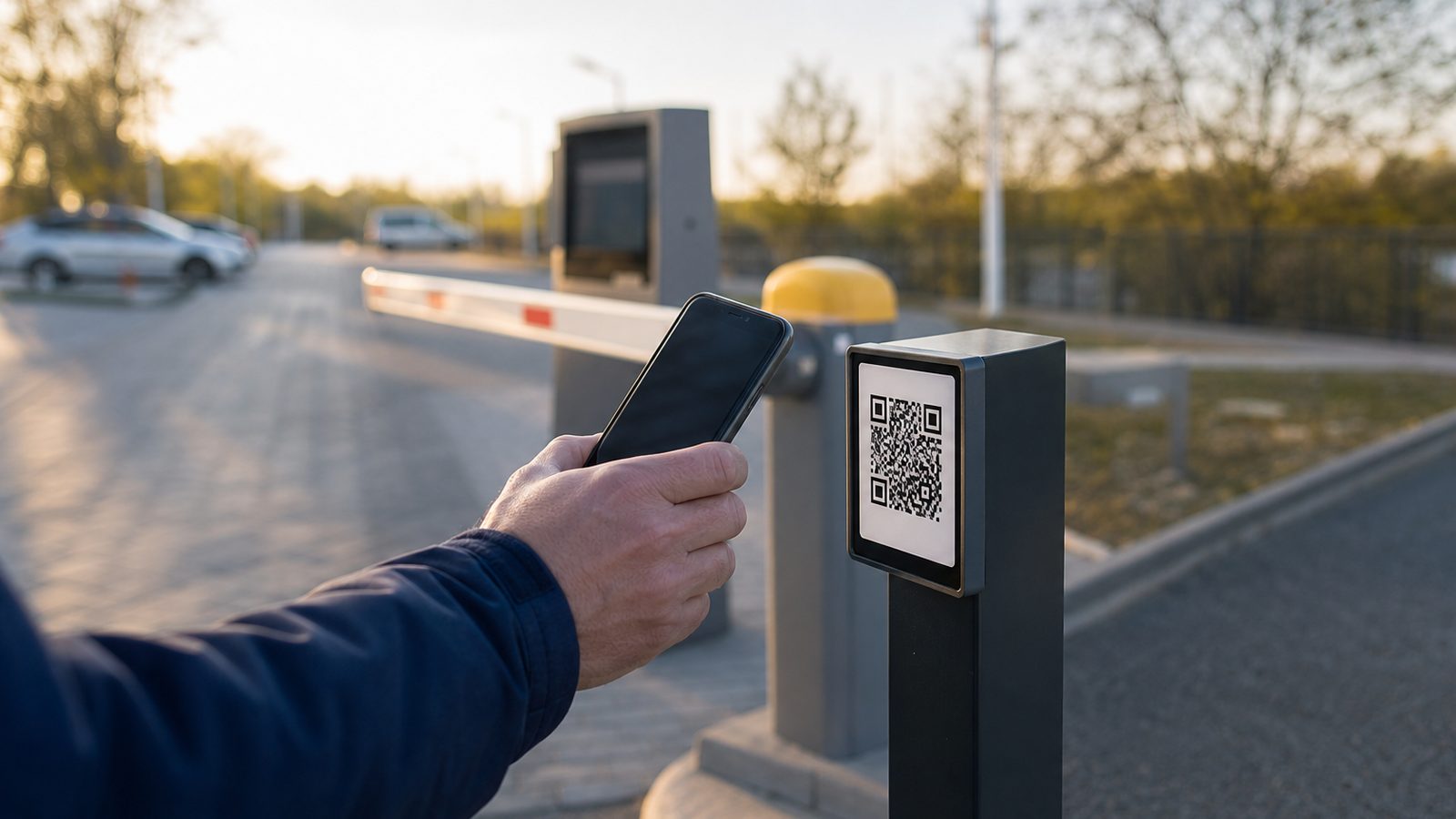
- Payment without staff — by QR code from a smartphone or at a payment kiosk.
- Accounting per carrier. A fleet is linked to a company, so you see entries, time on site and the amount due for each counterparty.
- Booking slots. A driver receives a time window in advance; the system recognises the plate and lets the vehicle in at its slot. Instead of a queue along the road you get a managed flow, and the warehouse knows who is next.
Where such sites lose money
Night cash. The classic: the driver pays the operator, no receipt is issued, the money never arrives. Automation removes the possibility of that arrangement rather than policing it.
Manual openings. The second biggest loss is the barrier being raised for “our people”. Every manual opening is logged with a timestamp — in practice the most useful report in the system.
Idle capacity. Without data you do not know real occupancy and cannot manage price. With it you can see when the site runs half empty and whether a night tariff makes sense.
Prices
- Barrier already installed — control part with plate recognition: from €2,000.
- Full set for one entry and exit — from €4,000.
- Payment kiosk — €1,000, with a bill acceptor €200 more.
- Cloud infrastructure and updates — from €200 per month.
An uninterruptible power supply is included, so a night arrival does not depend on the grid. Launch takes from one week when the mechanics are already in place.
Common questions
Can we bill carriers monthly instead of charging drivers?
Yes, that is the standard setup here: the fleet belongs to a company, and the report per counterparty is what you invoice against.
Can access be limited by time?
Yes. Access is scheduled, so a given carrier enters only within its window, and attempts outside it are logged.
Will recognition work on a dirty plate at night?
Cameras are chosen for the site and mounted for the geometry of truck entry. Where a plate cannot be read reliably, a fallback method is configured so the vehicle is never simply stuck at a closed barrier.
See also: complete parking systems · parking equipment · parking for office buildings
Other property types
Configuration differs by object: residential complexes · shopping malls · office buildings · logistics and truck stops